Students Kit ‘Measurement of temperature, weight and length’
Measuring and Comparing Temperature, Weight and Length
School level: Primary school
Materials: for up to 18 working groups
Use: Student activities and experiments on measuring temperature, weight and length, as well as selecting, reading and using different measuring instruments correctly in science and mathematics lessons
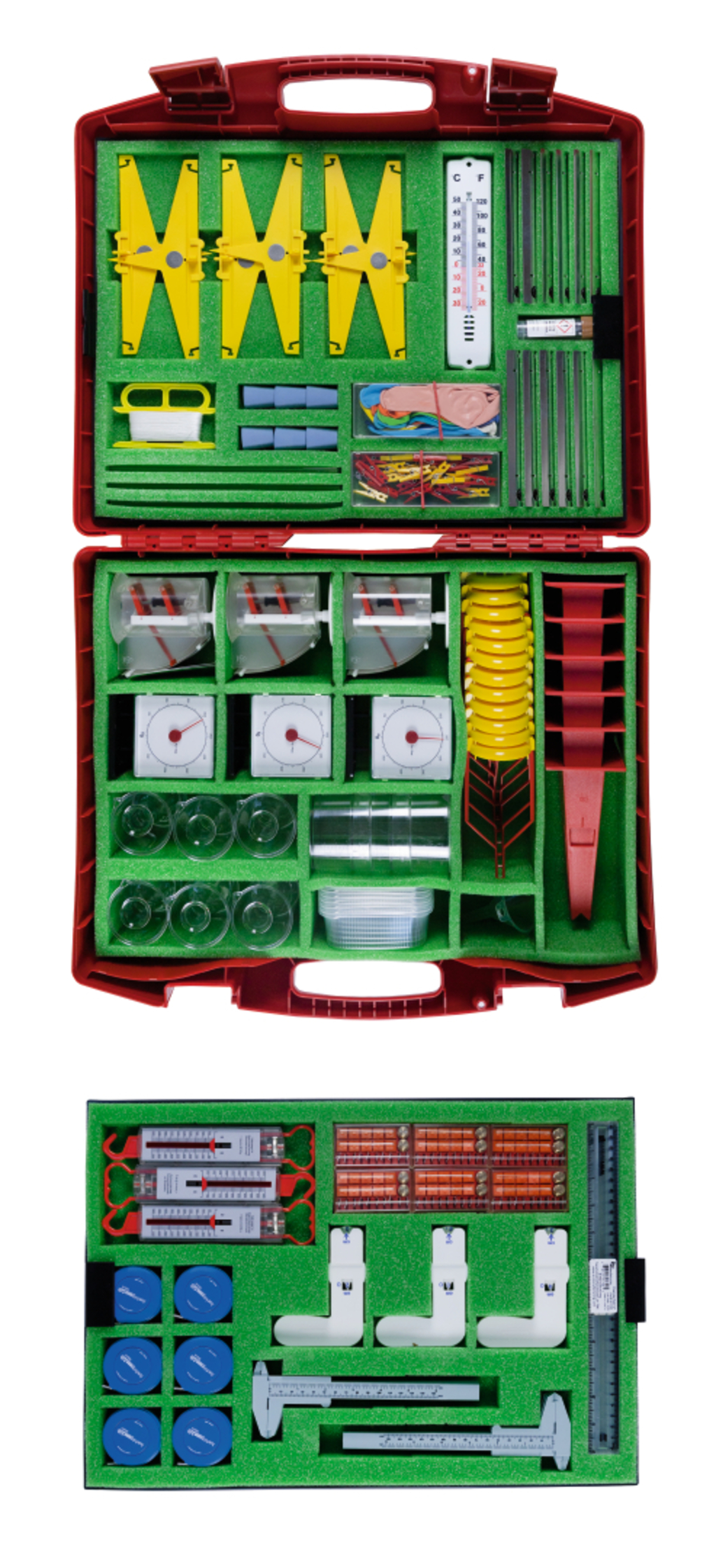
With the Students Kit ‘Measurement of temperature, weight and length’, students become familiar with different measuring instruments and use them independently in practical measurement activities. The set combines three fundamental quantities: temperature, weight or mass, and length, making it suitable for both science and mathematics lessons.
When exploring temperature, students work with thermometers, learn about different temperature scales and build a simple thermometer model themselves. Reading exercises and practical measurement activities help them understand temperature scales and record measurement results correctly.
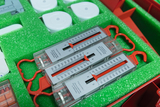
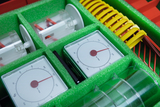
For weighing, students use different types of balances. These include beam balances, spring and steelyard balances, as well as sets of weights. Students become familiar with different measurement principles and determine the mass of everyday objects.
For length measurements, students use tape measures, rulers, callipers and measuring wheels. They practise handling the different measuring instruments correctly, work with centimetres and millimetres, and measure objects as well as dimensions of their own bodies.
In a final measurement triathlon, students apply what they have learned by selecting the appropriate measuring instrument for a task, carrying out the measurement correctly and documenting the result.


Technical specifications
Size of kit: 540 x 450 x 150
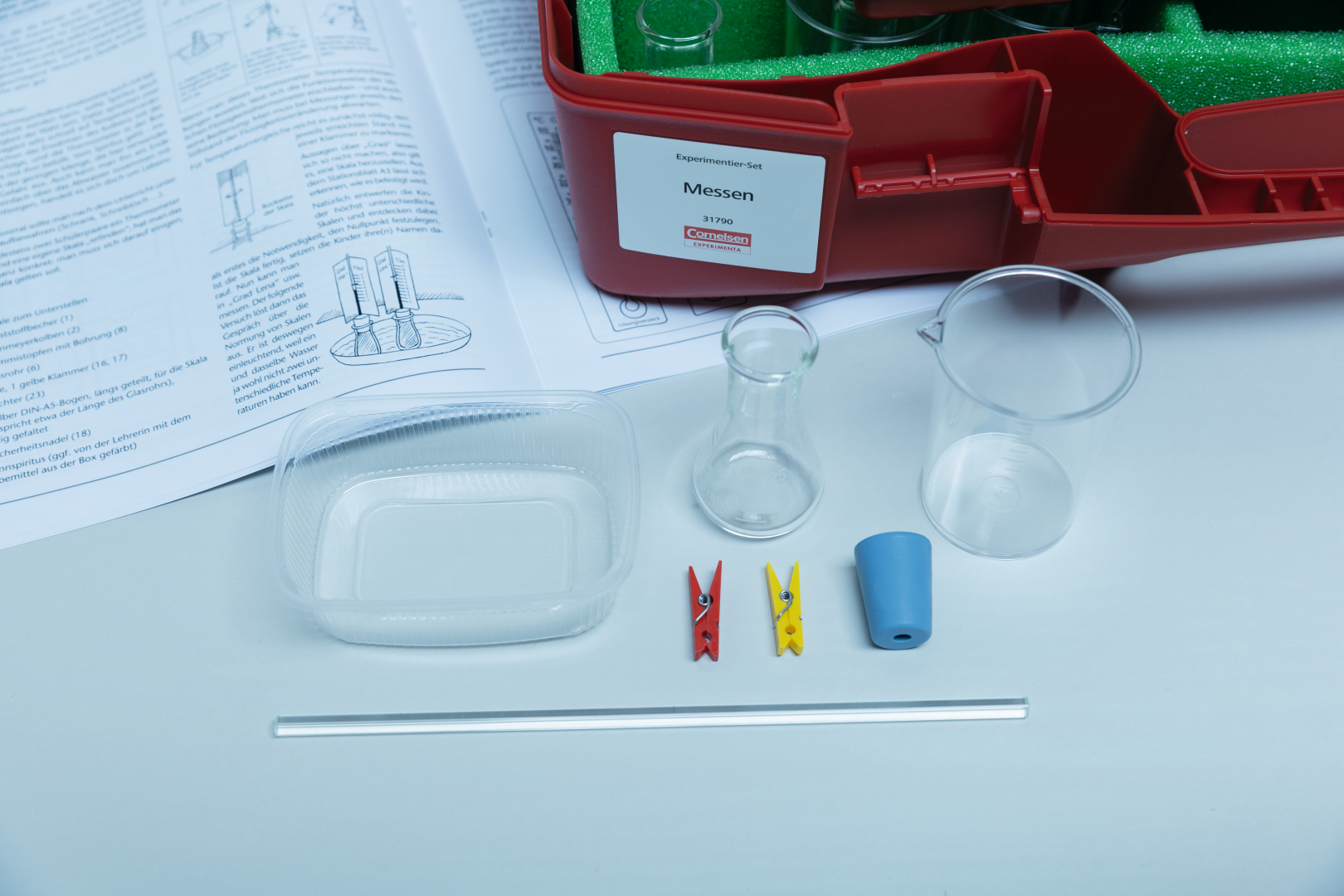
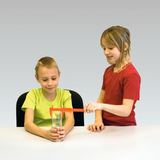
The children build a thermometer themselves.
Children enjoy making and using this functional model to practice alone or with a partner. It shows two thermometers at the same height.
We will shortly provide you with a description of the experiment at this point.
The name of the station already suggests it: It is intended for the children who have mastered measuring with a thermometer.
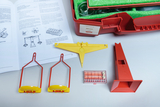
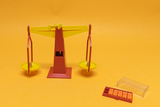
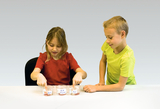
While building this very simple yet functional scale model, children will learn a lot about beam scale technology.
In this type of balance, you do not compare the mass to be weighed with another (that of the weights), but with the change of a spring.
The spring scale can be used to quickly weigh many satchels and start a fruitful conversation. In order for the children to be able to independently understand the facts according to the model of learning at stations, the text includes a table that provides a rough guide to how much 10% of one's own body weight is.
The aim of this station sheet is to answer the question that children like to ask: How does the manufacturer of yardsticks and rulers know what a meter is?
As is usual with station work, the children work out the correct use of the tape measure from the station sheet before taking the suggested measurements. Of particular importance, of course, are the application of the zero point and the tensioning of the tape. Some children also need to be sure about the division of the tape into cm and mm.
The goal of working with this station sheet is to provide countless measurement activities with high motivation. With this simple device, the children can make measurements that are not possible for them with the rulers and triangles they usually use at school: Diameters (inside and outside) depths, thicknesses, lengths that are complicated to determine.
Being able to recreate the coveted caliper out of the box is highly motivating. The model also works amazingly well and has proven itself in many elementary school classrooms.
To measure is to compare. Units of measurement represent agreements about what to compare with, how the units are defined, and how or after whom they are named. This is the insight that this station provides.
The goal of working with this station sheet is hands-on measurement training. Although the children themselves will find many measurement locations in the classroom, 19 tasks are provided here to ensure maximum measurement and systematic note-taking.
If you want to lead children in the long term to understand how to handle technical devices they are still unfamiliar with, this is an opportunity to do so.
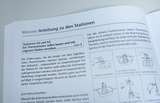
First of all, they deal with the "instructions for use" for the scales, whereby they follow each step on the scales in an active way.
Children use it often enough to achieve the desired training success and learn elementary things about measuring tapes while gluing them together.
- 6 × Thermometer, student type –25 to +50 °C
- 3 ×
- 2 ×
- 6 ×
- 3 × Carrying bag
- 1 ×
- 6 × Balance beam, yellow
- 6 × Balance stands, plastic
- 3 × Dial balance, 500 g
- 2 ×
- 1 ×
- 3 × Dial balance, 100 g
- 6 × Graduated plastic beaker, 100 ml
- 6 ×
- 6 × Rubber stopper with 6 mm bore
- 6 × Weight set for beam balance
- 1 × Dye (food colouring), red
- 6 × Thermometer student type –5 to +100 °C
- 3 × Measuring wheels (Metrilog)
- 3 × Plastic beaker, 250 ml, with scale
- 1 × Tread on spool
- 12 × Scale plan, yellow, with bows
- 6 ×
- 1 ×
- 12 ×
- 6 × Erlenmeyer flask, Duran 25 ml
- 1 × Foam insert 2 for 31790, 505x355x25 mm
- 6 × Balance slider (adjustment rider)
- 1 × Storing diagram,int.vers.
- 1 × Foam insert 1 for 31790, 505x355x25 mm
- 1 × Foam insert 3 for 31790, 510x365x80 mm
- 2 ×
- 6 ×
- 12 ×
- 12 ×
- 6 ×
- 6 ×